A River Runs Its Corse
So far as I can tell, “le canyoning” seems to be swimming in the river while wearing a helmet. I think there are some natural waterslides and cliff jumps involved, but we opted to climb. In the heat, the place was covered in locals, none of whom wore helmets.
In France, we discovered while awaiting our connection to Corsica, they have introduced this groundbreaking technology. The caps of disposable plastic bottles stay attached to the little ring around the neck of the bottle when opened, hereby solving challenges associated with plastic pollution. What challenges? Well, sometimes, when recycling, they tell you to remove the cap, so now you can’t. Emma and I hypothesized that it’s about either the buoyancy of the closed bottle or some statistic one could imagine about how overrepresented bottle caps are in the Great Pacific Garbage Island.
Light things like bottles just migrate their way toward water. Either they get blown off into a river, and then into the ocean, or rain or a flood comes and sweeps them away. The tendency of these things to head downhill toward the doldrums of the Pacific have helped us understand currents and water flows, how whatever starts in a river will end up at the beach.
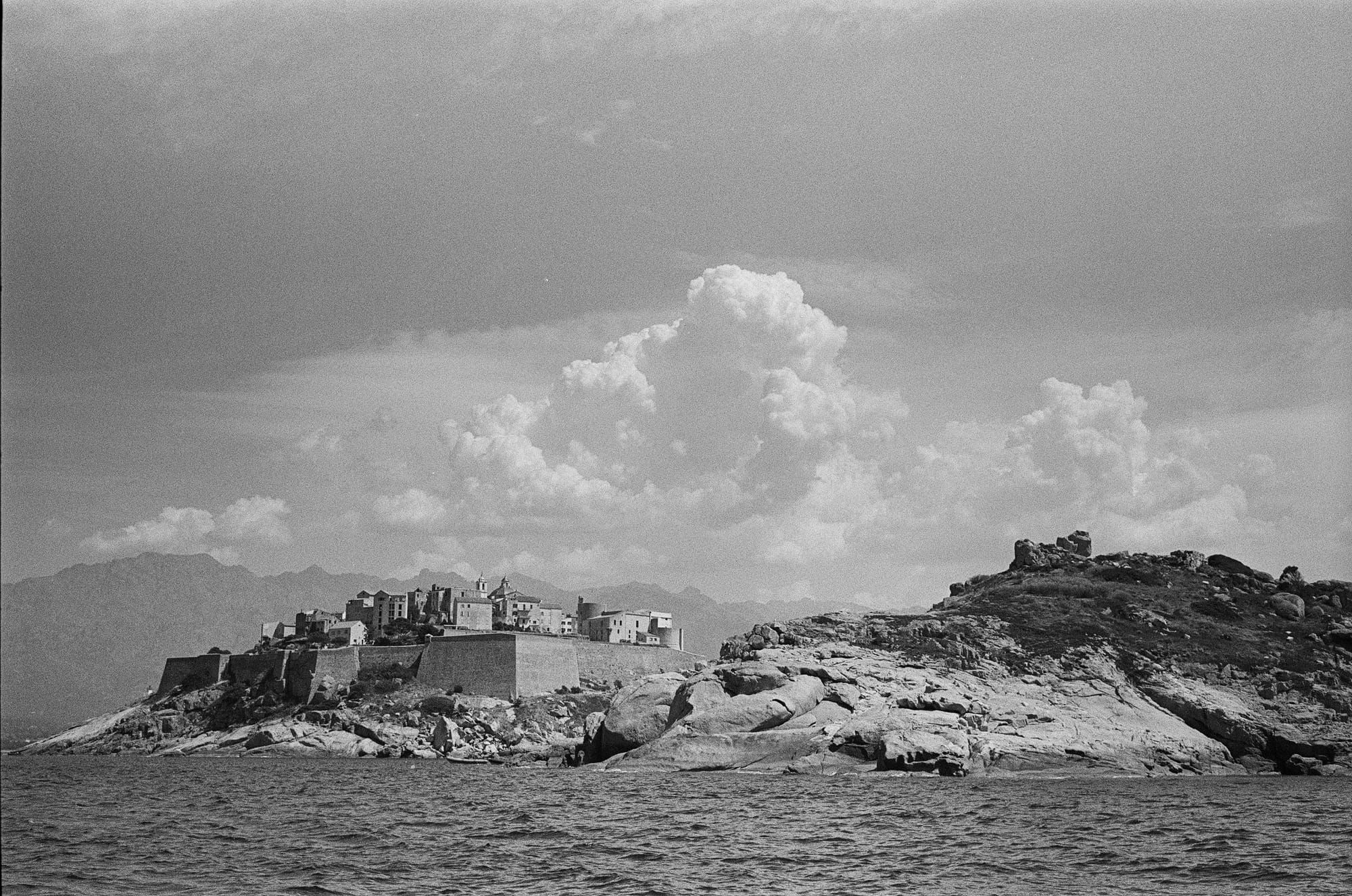
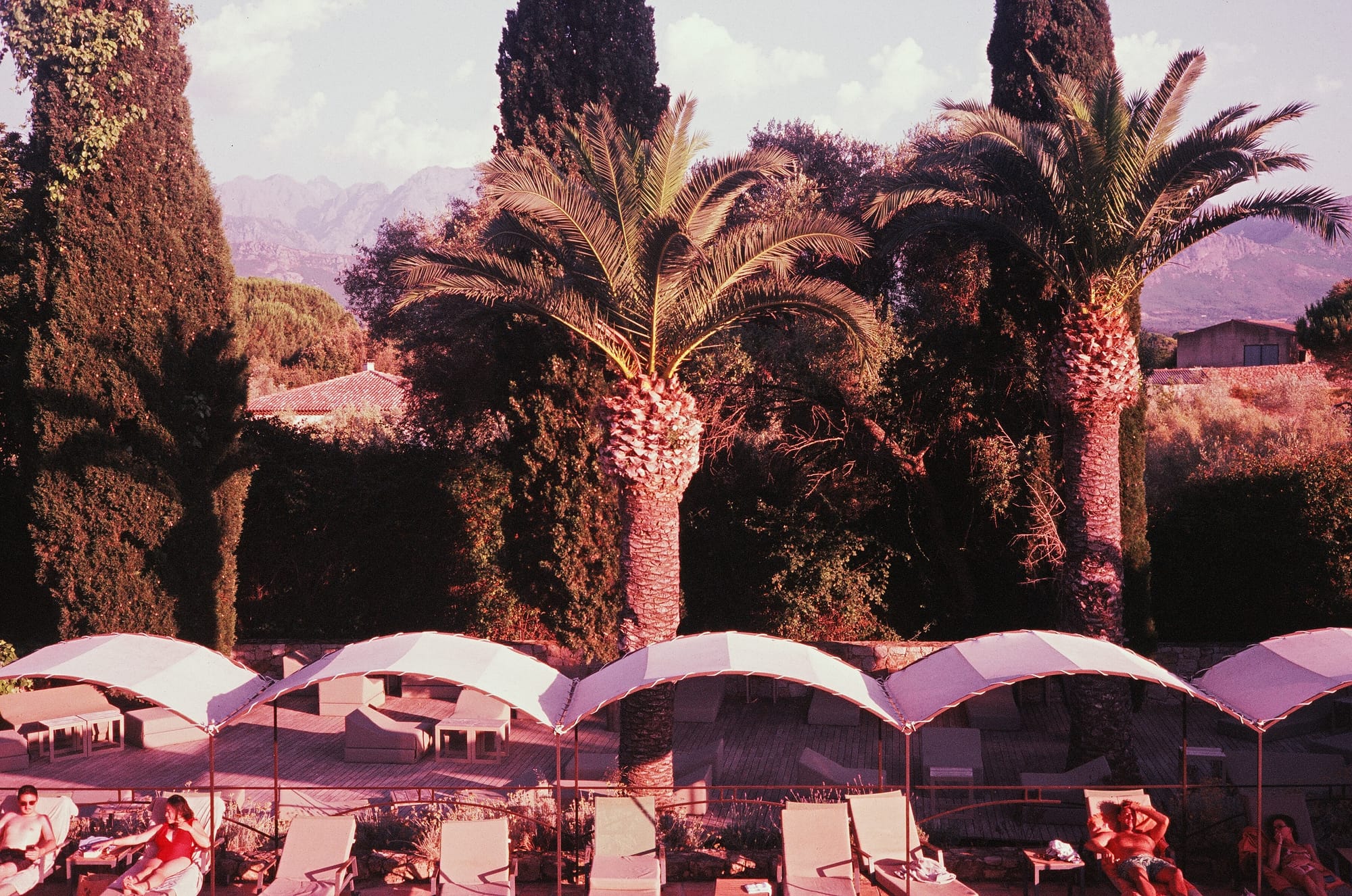
Our first day in Corsica, we went to the beach in Calvi. We ponied up 10 euros apiece for some lounge chairs at a beach club, sat around, and got bored. They thought my name was funny because it reminded them of Marius, a classic French comedy having something to do with a sailor. On our way back to the hotel, Emma asked whether I was glad to have gotten my beach time, because we wouldn’t be going back. The locals, Reddit said, spend more time along the rivers than the shore.
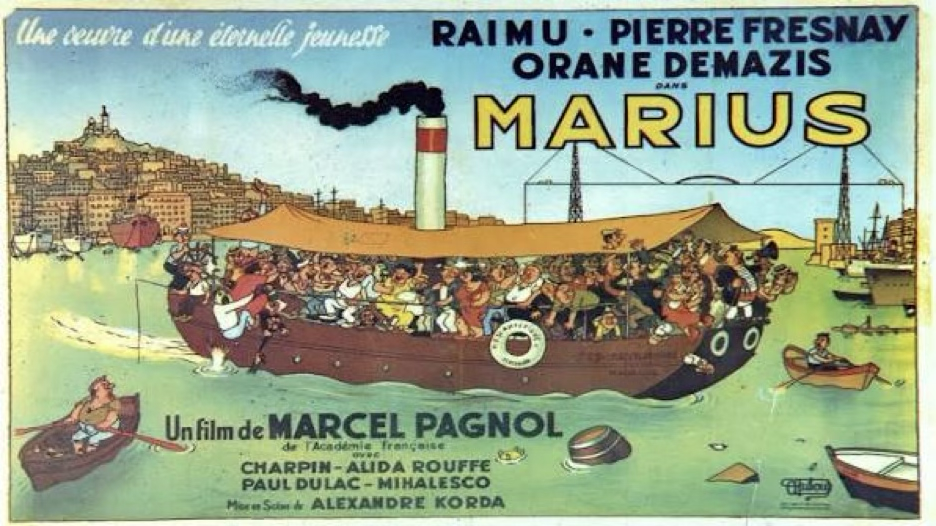
The next day, we went out on a boat to putter around the Scandola Reserve. We drove into a cave, swam among some fish, looked at some cliffs. Pulling into the boat access-only village of Girolata, the more scenic Corsican version of the Disney Cruise’s Castaway Cay. Visitors like us come to Girolata on boats overflowing with people like on the Marius poster that used to be in my parents’ living room so that we, too, could eat lunch somewhere different.
And so I should have been less surprised on Tuesday when our guide took us inland for a day of deep-water soloing (non-roped climbing, but over water so you can fall and live). Each time we came around a curve, I craned my neck to see if we were almost to the ocean. This took some effort, as I also had to avoid sliding into Emma or our guide, as we sat three-across in the front row of his buddy’s Ford transit. His car was in the shop, he explained, before asking whether we knew how to use crank windows.
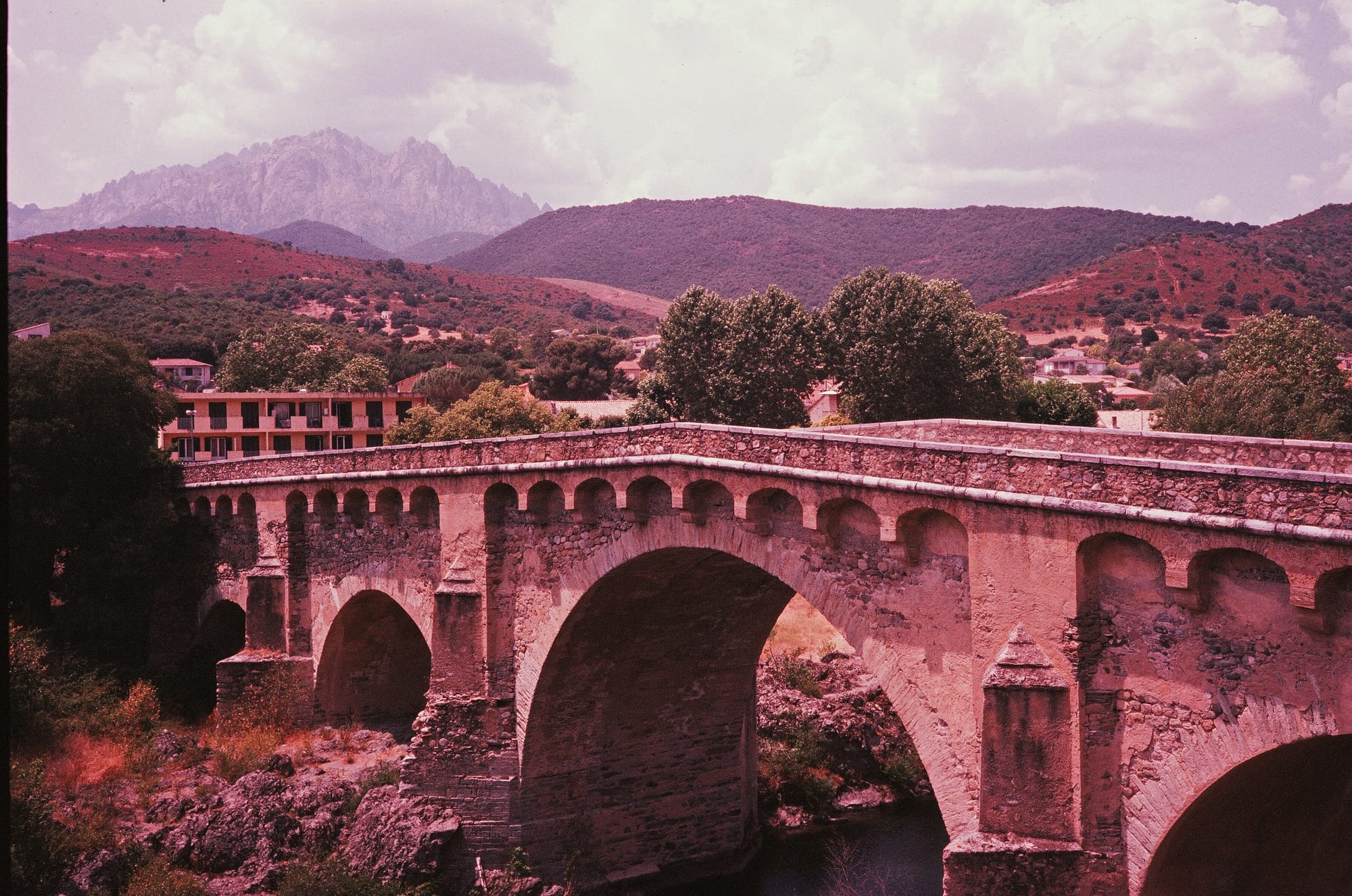
Though I had imagined us climbing dramatic ocean-side cliffs like in Scandola, climbing is prohibited there. Instead, our inland objective was the Fango valley, known for its steep, smooth canyon walls and deep, natural swimming pools. At one point on our way up the valley, we crossed a bridge over a bunch of gravel. We asked whether the river dried up, and I had in my mind a picture not unlike when you spill coffee, but it doesn’t quite have enough to dribble off the table.
In fact the Fango does go all the way to the sea, as it has a rich delta. From above, the part of the coast where the river drains is visible and abounds with turtles, various fishes, and all sorts of wildlife enjoying the fresh water in the over-salted Med. From the bridge, however, it’s just a bunch of rocks, which is normal for this time of year. During big rain events, or maybe the early spring, the water level rises, and our guide gestured to the highest point he had seen it, while pointing higher still to some place along the hill, well above the bridge, where a friend had seen it.
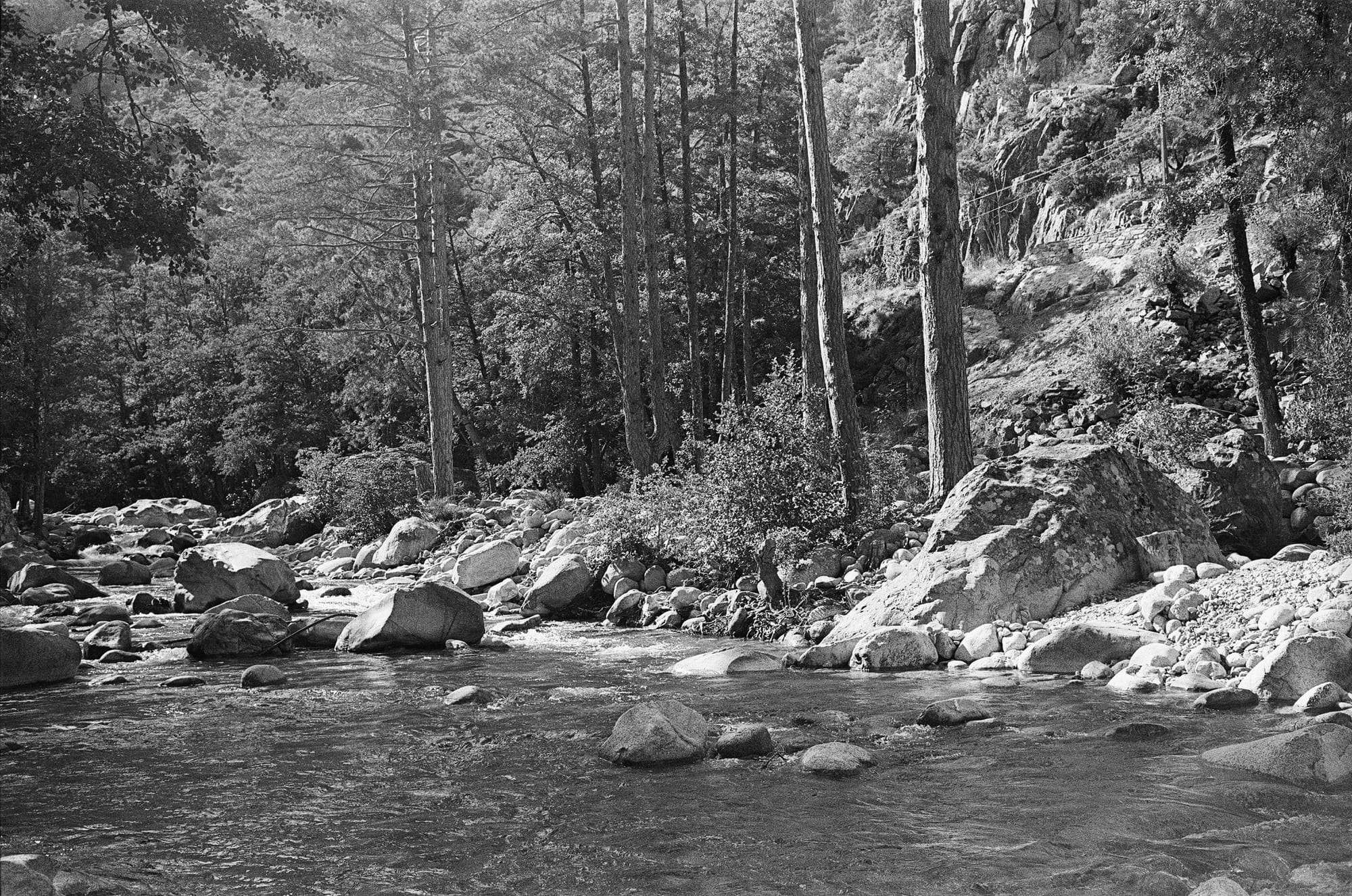
If a river is just the process whereby rainwater gets from wherever it falls down to the ocean, a big storm in these mountains can set the whole place swimming in under an hour as the moisture all speeds downhill. This process is a big part of how the erratics get moved and how the pools carve out in the canyon, and how we wound up there for a morning of climbing, even though our guide said he only sees one or two groups of Americans a year.
The river filled in as we went up the valley, and we started seeing the clear pools and high walls. These features made it the ideal place for us to climb, and we soon pulled into a spot our guide said had been a locals-only secret until Google blew it up and the tourists started coming to pursue “le canyoning.”
So far as I can tell, “le canyoning” seems to be swimming in the river while wearing a helmet. I think there are some natural waterslides and cliff jumps involved, but we opted to climb. In the heat, the place was covered in locals, none of whom wore helmets.
We started the morning by jumping off the tallest boulder into the water to prove we’d survive. Emma seemed to go right for it, but I remembered sometimes I’m afraid of heights. I very nearly conquered my fear, but I still managed to pump out my arms with my death grip. A little girl scrambled through a section where I’d been stuck, climbing down to my lower ledge where she wanted to jump off. Our guide told us that children’s forearms never get sore. As Emma and I tired, I pointed at a white spot on the mountain asking if that was snow or a waterfall. If that’s a waterfall, he told me, we have to get the hell out of here.
As we passed the bridge again on the way home, the stream bed looked bone dry. For the water to be underground implies it’s seeped out of a swimming pool or it’s permeated porous rock. Here, it’s more like somebody stacked too much Neon Aquarium Gravel Substrate in their fish tank and accidentally made an island.
There are still all these spaces between the rocks where the water flows, but it’s not visible. What constitutes ground becomes unclear, but there’s some kind of rocky or sandy bed beneath all of the golfball, grapefruit, and go-kart sized rocks piled on top. As a consequence, it looked just the same as on the way out, so we did get to see the same river twice, despite the proverb.
Packing judiciously to leave space for mustard in whimsical cups and unmailed postcards, I had taken my raincoat out of my bag. I once spent a summer in the South of France wherein I learned about life without air-conditioning and prayed, prayed for rain without receiving more than a couple drops. There was no way it would rain on this trip. And yet, the next day, while we drove from Calvi down toward Corte, the skies had opened up.
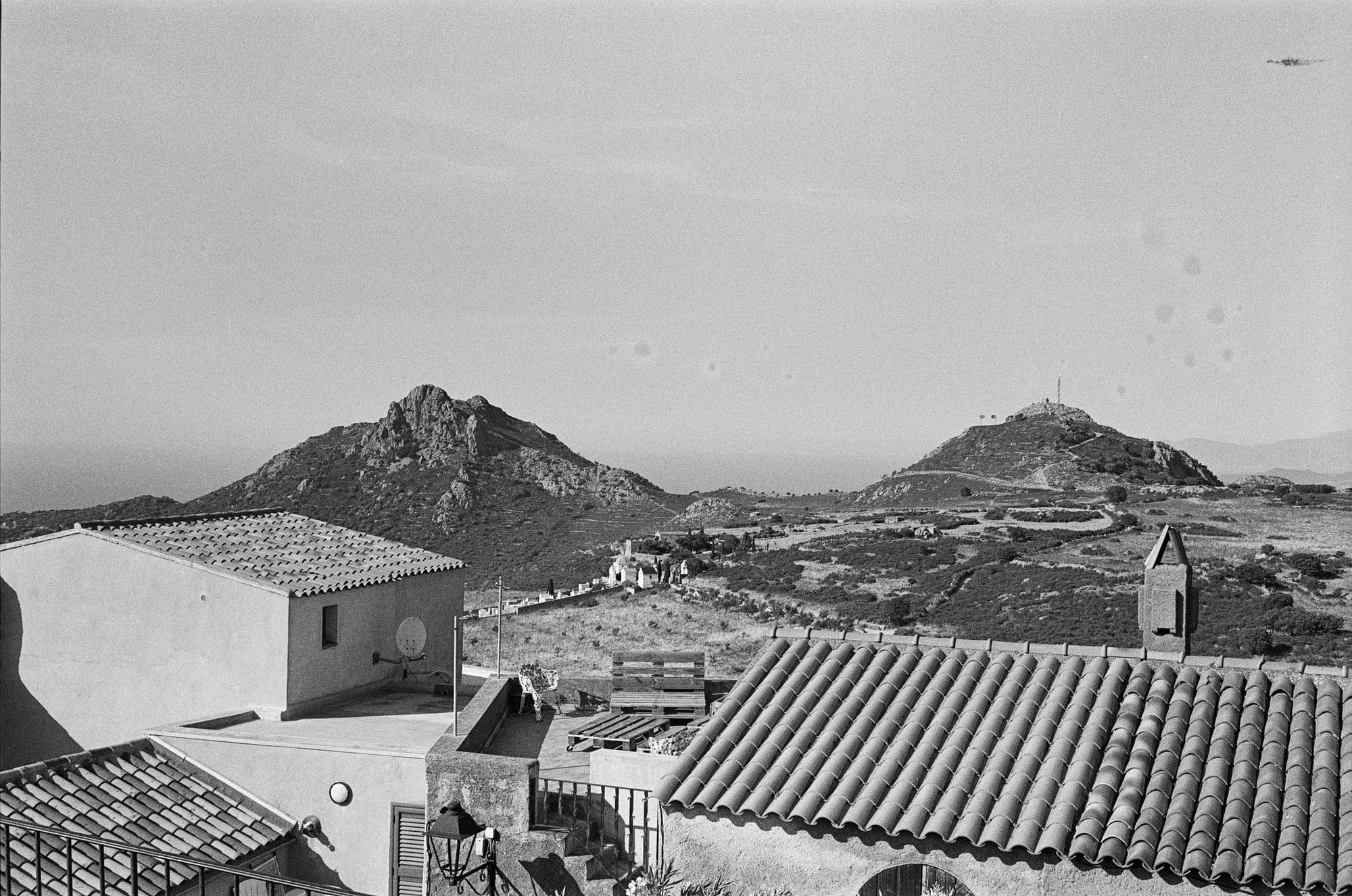
We made a stop in some small hill town that seemed pretty from the road. As we walked around, the sky darkened, and I kept patting my thigh to make sure nobody had picked my pocket, even though a black cat was the only living thing we had seen. We heeded my case of the willies, and, just a couple minutes after getting to the car, rain drops the size of nickels splattered onto our windshield, the temperature dropped 20 degrees, thunder and lightning, the whole thing.
With rain and flash floods on our mind, we sought some guidance from our new hotel’s front desk regarding the next day’s hike. She apologized for the weather and gave us a pamphlet.
Our hotel was situated right on a rocky bank of the Restonica river, and the city of Corte sits at its confluence with the river from the valley next door, the Tavignano. The road to our hotel used to go all the way up the valley to within an hour’s walk of the Restonica's source, the Lac du Mélu, but a 2023 storm washed it away. Now, the road only goes partway and is closed to private traffic, so hikers take one of the three most harrowing bus rides I’ve experienced up to the former site of one bridge. It sounded like a good choice for the next day’s hike.
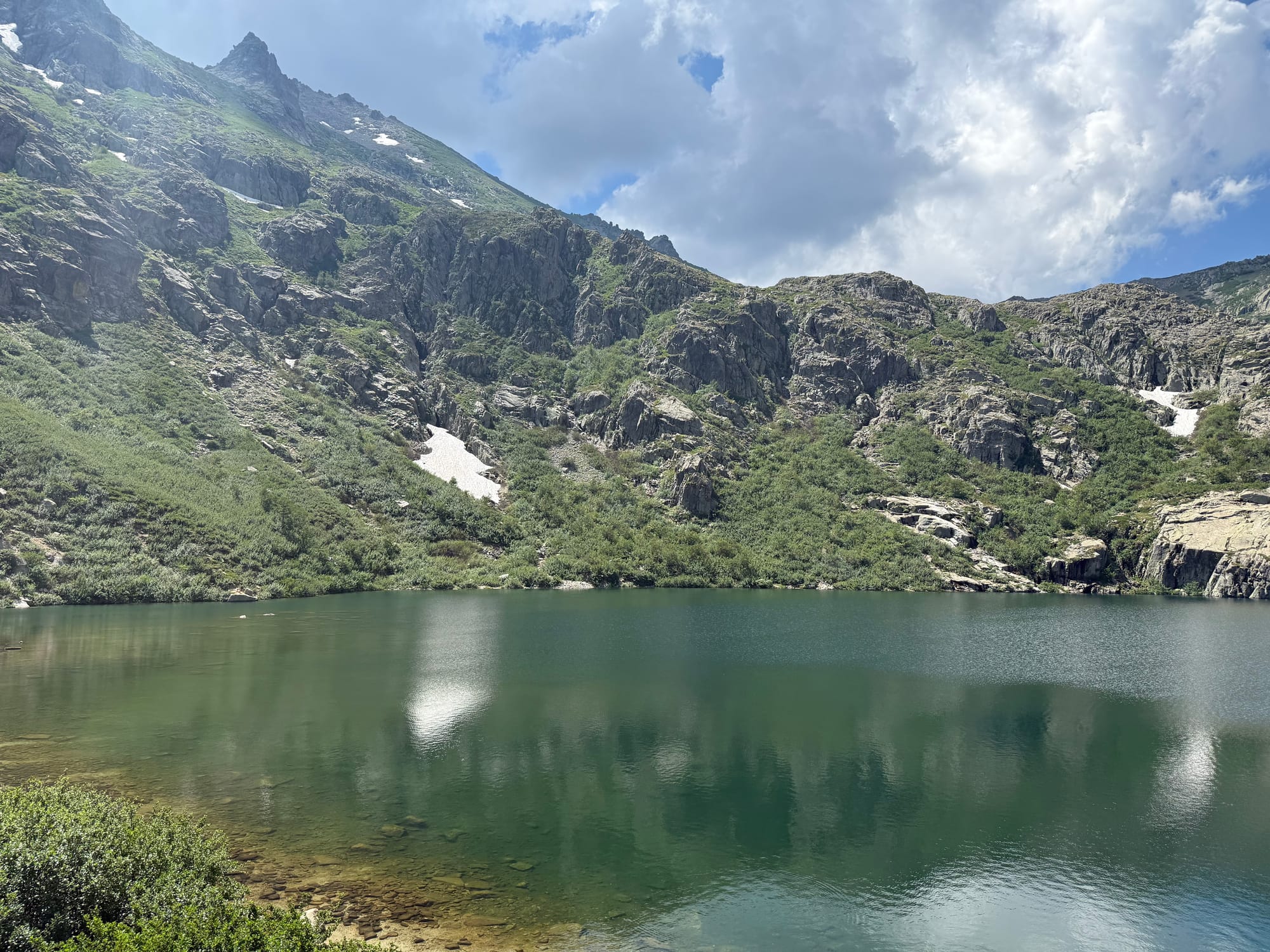
I carried a towel and trunks because I wanted nothing more than to swim during our 90-degree day hike, but of course there was a sign prohibiting not only swimming but also boating, which, I think they were safe on boating anyway. Nearby, a small wood sign pointed at an arbitrary braid of water flowing from the lake toward the beginnings of the river and read “source.” A second sign indicated it was another 45 minutes to the next lake, some 600 feet higher up.
We had walked perhaps six miles and driven at least that far, and the whole time there had been cascades of river flowing past huge glacial erratics, periodically collecting in natural swimming pools, dividing and rejoining, all the way down the valley. Corte’s a couple hours from the coast, though the roads are slow, so there is a good ways for the river to keep going. The source, however, looked so small. Surely the water would run out at some point.
Above the ridges surrounding our secondary source, clouds began to gather and darken, so we hightailed out.
Thoroughly worn out from our 12+ mile hike, we opted for a more mellow walk up the Tavignano river for our last full day. We brought a proper picnic but struggled to find our way to a nice shady riverbank. At one point, the trail diverged up the hill, away from the river. We eventually found a little side trail to follow down. Just as we were assessing how to cross the river at the trail’s end, a local skipped past us and rock-hopped to join two women who had been sunning themselves.
Their spot looked pretty good, but we had heard mixed things about how people react to tourists around here. The area is small and genial enough that, when I told a guy at a wine store we had a friend whose mother is Corsican, he asked whether it was his friend George. On the other hand, the university in Corte is named after Pasquale Paoli, an 18th century Corsican nationalist hero, and lots of the graffiti around town had a clear-enough message.
I imagined if we intruded on their spot, they’d say, “Oh, you’re Americans? Where are your helmets?” We stayed away. Eventually we settled down, and I waded off to stick our wine and my Nalgene between two rocks in the river to cool off on the 95-degree day. Never satisfied location-wise, I took a hop skip and a jump upstream, found nothing preferable, and returned. Though the wine had behaved and stayed in place, the water bottle had slunk off somewhere.
I thought I’d wedged it in well, but I knew it would float away if some surge or drop in the current came along. I should have known that it would, that the river would change while I was away. Sure enough, I found the bottle wedged in a little bit downstream, on the verge of barreling over its own little Niagara, working with the current to gather the strength to plunge off on a long journey to its brethren in the pacific.
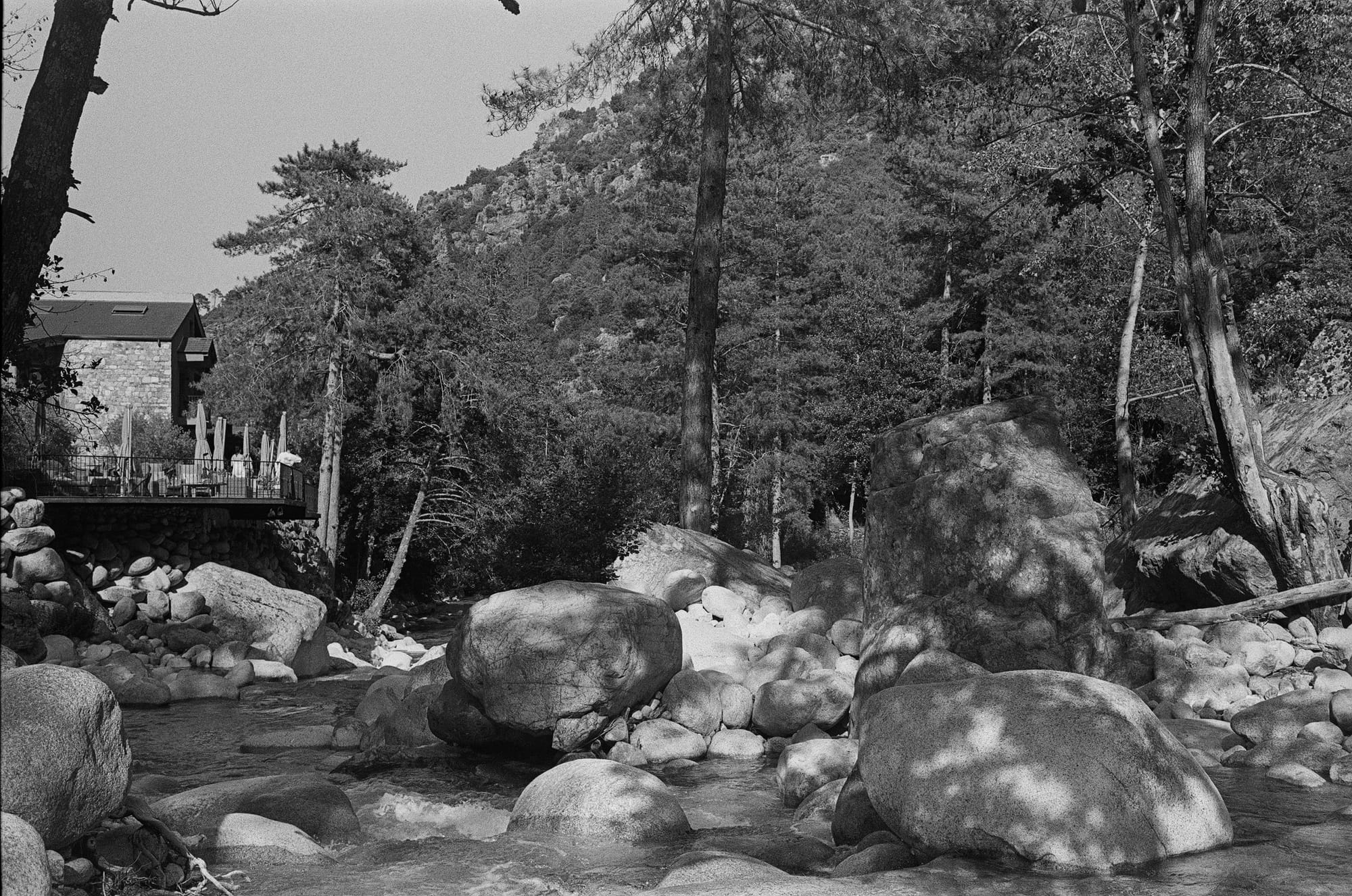
We found a deeper place to swim a bit farther down, where we could also sun ourselves next to a small waterfall in the shade of a large boulder. Looking up, clouds were forming again. We tried to relax, but, so close to this waterfall, all we could hear was the thundering flash flood befalling the skipping stones at its base. They make white noise machines to mimic waterfalls, and the locals upstream seemed carefree, but the constant sound of overflowing water had us on edge.
Down in town, the river flows as though it has forever, and a huge citadel sits atop a steep cliff the river and its onetime glaciers carved. Up at the source of the river, we were sure there wasn’t enough water. But down in the pools, we had visions of getting caught in too much.
Without a guide, Emma and I didn’t know where to go, or when we would be safe. We just knew that the water is always looking for the easiest way down, and if we were in the wrong place at the wrong time, we’d be in trouble. Nonetheless, at some point, all the coffee has to flow off the table. Rain and snow replenish the Lac du Mélu, but if they stop, the river will finish its work, and it won’t take too long. Among other global problems, we'd be stuck going to the beach.
I spent a few days in the South of France after Corsica, and on my last night, I heard a little pop and splash, ignored it, went to bed, and woke up to a flooded apartment just around three in the morning. I worried the water was coming from the hallway because it was pooled most by the front door. Alternatively, maybe the water just wanted to take the stairs down, go left, then go left again and follow the Rue des Îles to the sea. I poked my head out and found that the source had to be inside the apartment.
The hose on a certain European piece of plumbing I didn’t know how to spell had ruptured, but I found the valve to turn it off. I used the shower squeegee to point my small lake toward the drain, the actual easiest way down. I surveyed the wreckage, relieved I didn’t cause a flash flood in a foreign country. The bottom of my duffel was wet, and the bag was heavier than I remembered. As for the handful of empty bottles set next to the couch for recycling, my rivulet had brought them to the door, though it had left their caps undisturbed.